
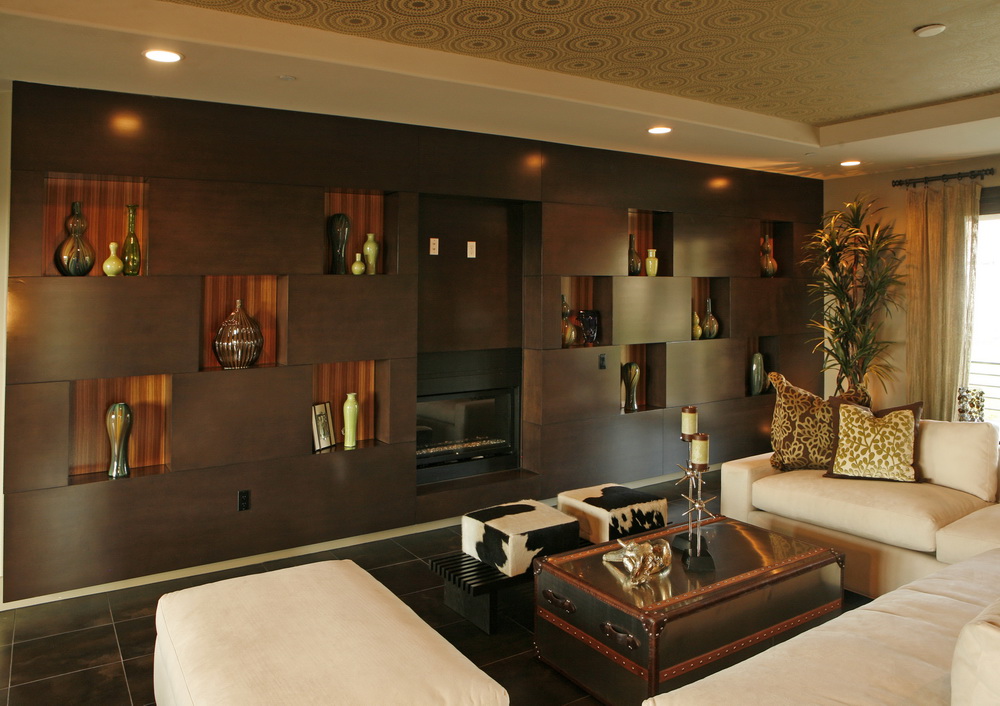
STAGING

Check out our article from the Las Vegas Review Journal:
www.insidestylehome.com/PRESS-RELEASES.pdf
Or read here,
All Your Home’s a Stage
Staging homes makes for faster sells
By XAZMIN GARZA
LAS VEGAS REVIEW-JOURNAL
When GraceAnn Nipper decided to sell her Henderson home, she wanted to do it fast. But,
Nipper understood she wasn’t exactly alone in her endeavor. With 21,181 units on the market in
May, according to the Greater Las Vegas Association of Realtors, she knew she had her work cut
out for her.
Nipper didn’t stress it, though. As a real estate agent herself for Independence Realty, she had a
few tricks up her sleeve and managed to sell her property in two weeks, a time frame on par
with the speed of light in today’s sluggish real estate market. It wasn’t accomplished through
underpricing, either. Nipper relied on the age old practice of staging her home.
“(Staging) is big,” she says. “It’s really, really big. It presents a house so that you can see it’s
been well-maintained.”
Staging is the difference between taking a trade-in to the car dealership straight from the mud
races and taking it in just after it’s been scrubbed, waxed and polished. The same car gets
presented, but one has a figurative big red bow on top of it. The car quickly goes from
something resembling a plea to a hardball negotiation chip. It explains why more real estate
agents are suggesting staging to clients and why a slew of interior decorators have added
staging to their resumes.
Jill Abelman, owner of Inside Style Home and Design, has been staging homes for 23 years. She
put in the brunt of that time decorating model homes, the “model” for home staging. “You’re
trying to bring in a sense of calm and organization,” she says. “A lot of times homes for sale are
chaotic.”
The biggest misconception concerning staging is cost. More often than not, it involves
subtracting more than it does adding. Most people overfurnish their homes, leaving little to
potential buyers’ imaginations and much to their curiosity. According to Abelman, a home full of
photos and personal mementos detracts attention from the actual home and pulls it into your
individual interests. Suddenly a home advertised as having spacious bedrooms and cathedral
ceilings turns into the house with the cookie jar collection and all the wedding pictures.
“Put all that stuff away so they’re only looking at the home,” she says.
All Your Home’s a Stage – image – ReviewJournal.com http://www.printthis.clickability.com/pt/cpt?action=cpt&title=A…
1 of 3 7/7/09 1:55 PM
Think of physical clutter as purchasing clutter. Be sure buyers have ample space to explore the
house. Hallways should be open and corners should allow for easy clearance. Remove anything
that doesn’t serve a function special to the room it occupies. A computer desk in the office
works; one in the master bedroom doesn’t. Buyers want to immediately begin the visualization
process. Customizing your use of space (converting the dining room into a play area) throws an
unexpected hurdle into that process.
Staging can go as far as a seller is willing to take it. Cleaning, decluttering and making proper
use of space costs little to nothing. The next step is focusing on small details that carry a big
impact. Abelman recommends concentrating on the lighting in the home. “Leaving all the lights
on when you show it warms up the house,” she says.
To further the impact, update the lighting fixtures and highlight windows with inexpensive rods
and modern drapes. Both will run you less than $300 and put a pretty spotlight on each room.
Some clients take staging full circle to make it more than just a visual experience. Abelman has
known owners to pop a batch of cookies or a loaf of bread in the oven just before showing their
properties. If it’s the holiday season, stereos are left on and playing songs such as “Winter
Wonderland” at a low volume.
Carolyn Mullany, a realtor with Coldwell Banker Premier Realty, refers to this as “making the
buyer look at a home instead of a house.” As a real estate agent who primarily works with
luxury homes, she says about one house in her price range will sell a month. For her, staging is
essential, which is why her agency regularly works with the same pool of interior designers.
“If you don’t stage then you’re putting yourself at a disadvantage,” she says. “Even if you just
do curbside staging.”
A new welcome mat, freshly painted front door and a couple potted plants all lend an inviting
first impression and build anticipation for what’s to come.
David Coleman, president and director of design for David Coleman Ltd., just completed a
staging project for a spec home in Southern Highlands. Although he primarily performs
residential work for people just looking to freshen their home’s look, Coleman’s seen an uptick in
his staging requests as of late. Why?
“Most people don’t have good design sense,” he says.
They come to him to make the house they want to sell appear “special.” The goal is anything but
mass market for his clients, who usually are real estate agents wanting to sell empty luxury
homes. His job is to fill it with items that will sell a lifestyle, a much different objective than the
standard $160,000 homeowner has. For them, Coleman has some advice. Ask someone whose
taste you trust to do a walk-through and let them critique away. If that’s not an option, do it the
old-fashioned way.
“You just need to make your home look like a model home,” he says. “Go look at the model
homes to get ideas.”
Find this article at: